
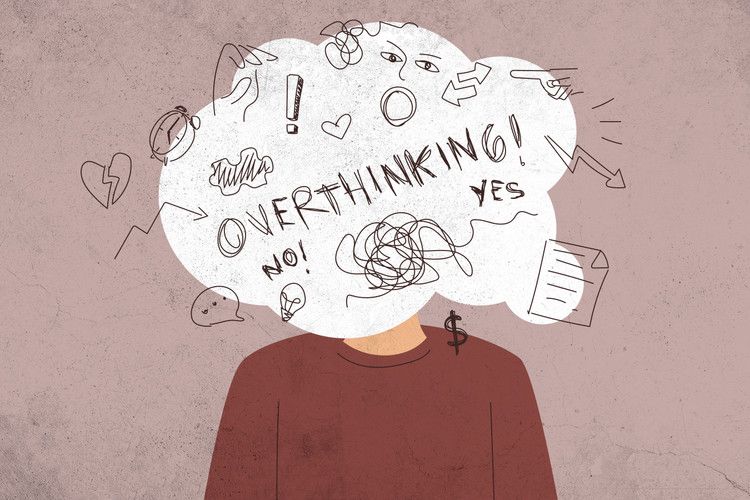
Many people believe that overthinking means they are being thoughtful, analytical, or intelligent.
But in reality, overthinking is often the opposite of productive thinking.
Instead of helping you make better decisions, overthinking can trap your mind in endless loops of doubt, stress, and second-guessing.
If you constantly replay conversations, worry about future scenarios, or repeatedly analyze decisions, you may be overthinking.
In this article, we’ll decode common myths about overthinking and explore practical ways to regain mental clarity.
What Is Overthinking?
Overthinking happens when your mind repeatedly analyzes the same thoughts without reaching a solution.
Instead of problem-solving, the brain gets stuck in repetitive thinking cycles.
Psychologists often link overthinking to anxiety, stress, and perfectionism.
According to the American Psychological Association, persistent rumination can negatively impact mental well-being and productivity.

Signs You Might Be Overthinking
Many people don’t realize when normal thinking becomes overthinking.
Here are some common signs.
| Sign | Explanation |
|---|---|
| Replaying conversations | Analyzing what you said repeatedly |
| Fear of making mistakes | Delaying decisions |
| Imagining worst-case scenarios | Excessive worry |
| Difficulty sleeping | Thoughts keep racing |
Recognizing these signs is the first step toward controlling overthinking.
Myth 1: Overthinking Means You’re Intelligent
Many people assume overthinking is a sign of intelligence.
But research shows that productive thinkers focus on solutions, not endless analysis.
While critical thinking is useful, overthinking rarely leads to better decisions.
Instead, it often increases confusion and mental fatigue.
Myth 2: Overthinking Helps You Avoid Mistakes
Another common belief is that overthinking prevents bad decisions.
In reality, excessive analysis can create decision paralysis.
| Thinking Style | Result |
|---|---|
| Balanced thinking | Clear decisions |
| Overthinking | Delayed action |
| Impulsive thinking | Risky decisions |
Healthy thinking involves reflection and action, not endless worry.

Myth 3: Overthinking Solves Problems
Ironically, overthinking often makes problems feel bigger than they actually are.
When you repeatedly analyze a situation, your brain tends to focus on potential risks rather than solutions.
This mental pattern can create unnecessary stress and anxiety.
Instead of solving problems, overthinking drains mental energy.
Why Overthinking Happens
Understanding the causes of overthinking can help you control it.
Common triggers include:
- fear of failure
- perfectionism
- lack of confidence
- past negative experiences
According to mental health experts, these triggers can create mental loops that lead to overthinking.
Practical Ways to Stop Overthinking
Fortunately, there are effective strategies to manage overthinking.
Here are some proven techniques.
| Strategy | How It Helps |
|---|---|
| Journaling | Clears mental clutter |
| Exercise | Reduces stress hormones |
| Setting time limits | Prevents endless analysis |
| Mindfulness | Keeps focus on the present |
These habits can gradually reduce the impact of overthinking on your daily life.
Simple Technique: The 5-Minute Rule
One powerful strategy to control overthinking is the 5-minute decision rule.
If a decision is small, give yourself five minutes to think, then act.
This prevents the brain from entering long cycles of overthinking.
Over time, this technique trains your mind to focus on action instead of rumination.
Final Thoughts
Everyone experiences overthinking at some point.
But when overthinking becomes a habit, it can affect productivity, confidence, and mental health.
The key is not to eliminate thinking but to balance reflection with action.
By recognizing the signs of overthinking and applying simple strategies, you can train your mind to focus on solutions rather than endless worries.
FAQs
What causes overthinking?
Overthinking is often caused by anxiety, fear of failure, or perfectionism.
How do I stop overthinking?
Techniques like journaling, mindfulness, and setting decision time limits can reduce overthinking.
Is overthinking a mental disorder?
Occasional overthinking is normal, but chronic rumination can be linked to anxiety or stress disorders.
Can overthinking affect sleep?
Yes. Persistent overthinking can make it difficult to relax and fall asleep.
Is overthinking related to anxiety?
Yes. Overthinking is often associated with anxiety and excessive worry.
You’d Also Like to Read:
• The Perfect Morning Routine Is a Myth: What Actually Works for Productivity
• 7 sunscreen myths that are damaging your skin
• Does Detox water detox your body?