
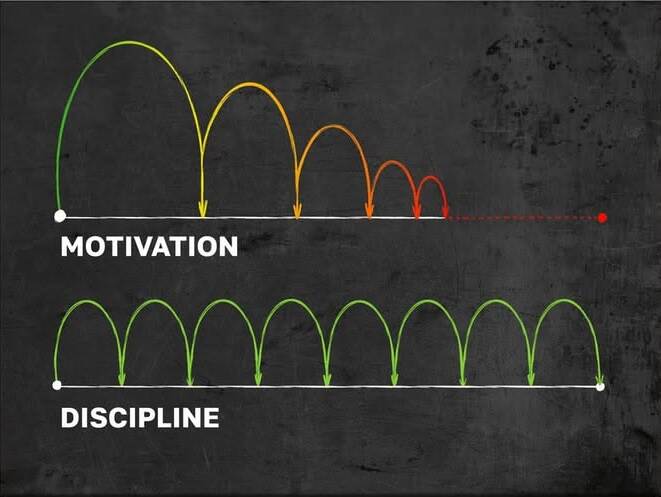
Most people believe that motivation is the key to success. We wait to feel inspired before starting a task, assuming that motivation will push us forward.
But here’s the truth—motivation is unreliable.
The debate around motivation vs discipline is one of the most misunderstood concepts in productivity. While motivation feels powerful, it is discipline that actually drives long-term success.
Let’s break down this myth.
🧠 What Is Motivation?
Motivation is the emotional drive that pushes you to take action.
It comes from:
- Inspiration
- Goals
- External rewards
- Mood
The problem? Motivation is temporary.
Some days you feel highly motivated, while on others, you don’t feel like doing anything at all.
🔄 What Is Discipline?
Discipline is the ability to take action regardless of how you feel.
It is built through:
- Habits
- Consistency
- Routine
- Self-control
Unlike motivation, discipline does not depend on emotions.
❌ The Biggest Myth About Motivation vs Discipline
The biggest misconception is:
👉 “You need motivation to get started.”
In reality, action creates motivation—not the other way around.
This is where the motivation vs discipline myth misleads people. Waiting for motivation often leads to procrastination and inconsistency.
🔬 What Science Says?
Research in behavioral psychology shows that habits and consistency play a bigger role in productivity than motivation.
Experts suggest that building systems and habits is more effective than relying on motivation alone.
This clearly shows why the motivation vs discipline concept matters for long-term success.
📊 Motivation vs Discipline (Comparison Table)
| Factor | Motivation | Discipline |
|---|---|---|
| Based on emotions | Yes | No |
| Consistency | Low | High |
| Reliability | Unpredictable | Stable |
| Long-term success | Weak | Strong |
| Requires effort | Low initially | High initially |
⚠️ Why Relying On Motivation Fails?
Relying only on motivation leads to:
- Procrastination
- Inconsistent work
- Loss of progress
- Burnout cycles
This is why many people struggle with productivity—they depend too much on how they feel.
💡 How Discipline Actually Builds Productivity?
Instead of chasing motivation, focus on building discipline.
✔️ Practical strategies:
- Start small (5-minute rule)
- Set fixed routines
- Remove distractions
- Track habits
When you take action consistently, motivation naturally follows.
🧠 How To Shift From Motivation To Discipline?
Understanding the difference between motivation vs discipline is important, but applying it in real life is what truly matters.
Most people struggle because they rely on feeling motivated before starting. The key shift is to take action first, even when you don’t feel like it.
✔️ Simple ways to build discipline:
- Follow the 2-minute rule
Start with just 2 minutes of a task. This reduces resistance and helps you begin. - Create a fixed routine
Doing tasks at the same time daily removes the need for motivation. - Reduce decision fatigue
Plan your day in advance so you don’t waste energy deciding what to do. - Focus on consistency, not perfection
Showing up daily matters more than doing everything perfectly.
🧠 Why This Myth Became Popular?
The idea of motivation became popular because:
- It feels good emotionally
- Social media promotes “hustle inspiration”
- Quick results are appealing
But real productivity is built through repetition, not inspiration.
📊 Daily Discipline vs Motivation Example
| Scenario | Motivation Approach | Discipline Approach |
|---|---|---|
| Gym | Go when motivated | Go daily at fixed time |
| Study | Study when inspired | Study 1 hour daily |
| Work | Work when energetic | Follow schedule |
🧾 Final Conclusion
The debate of motivation vs discipline is not about choosing one over the other—it’s about understanding their roles.
Motivation:
✔ Helps you start
Discipline:
✔ Helps you continue
If you rely only on motivation, you’ll stay inconsistent. But if you build discipline, you create long-term success.
🤔 FAQs
1. Is motivation important for productivity?
Yes, but it is not reliable for long-term consistency.
2. Why is discipline better than motivation?
Because it works even when you don’t feel like doing the task.
3. How can I build discipline?
Start small, create routines, and stay consistent daily.
4. Can motivation come after action?
Yes, taking action often creates motivation.
5. Is it possible to succeed without motivation?
Yes, discipline is enough to drive long-term success.
You’d Also Like to Read:
• 7 Hidden Causes of Procrastination That Ruin Productivity
• How to Stop Overthinking: 7 Science-Backed Truths
• Ice On Face For Glowing Skin: Shocking Truth You Should Know (2026)